Airway suctioning can restore airflow, but poor selection may cause trauma, hypoxia, bleeding, or infection. How to select suction catheters for patient safety begins with assessing the patient, not choosing the most familiar package. Age, airway size, secretion thickness, ventilation status, and clinical condition all influence the decision. A neonatal patient needs a very different catheter from an intubated adult. Catheter diameter, length, tip design, flexibility, and control features should match the airway and procedure. Smaller sizes may reduce obstruction during suctioning, while larger sizes may remove thick secretions more effectively. The balance matters.
Small details matter.
Clinicians should review the device instructions, hospital protocols, and current clinical evidence before use. Open and closed suction systems have different handling requirements, particularly for mechanically ventilated patients. Sterility, packaging integrity, connection security, and vacuum control deserve a careful check. During suctioning, trained professionals should observe oxygen saturation, heart rate, respiratory effort, and patient discomfort. Excessive pressure, prolonged suction, or repeated passes can increase harm. It is tempting to treat catheter choice as a routine task. That assumption needs reconsideration. Evidence and practice may differ across settings, and no single catheter suits every patient. A safer approach combines professional assessment, manufacturer guidance, staff experience, and continuous monitoring. When a patient coughs violently, desaturates, or shows bleeding, the procedure should be reassessed immediately rather than continued automatically.
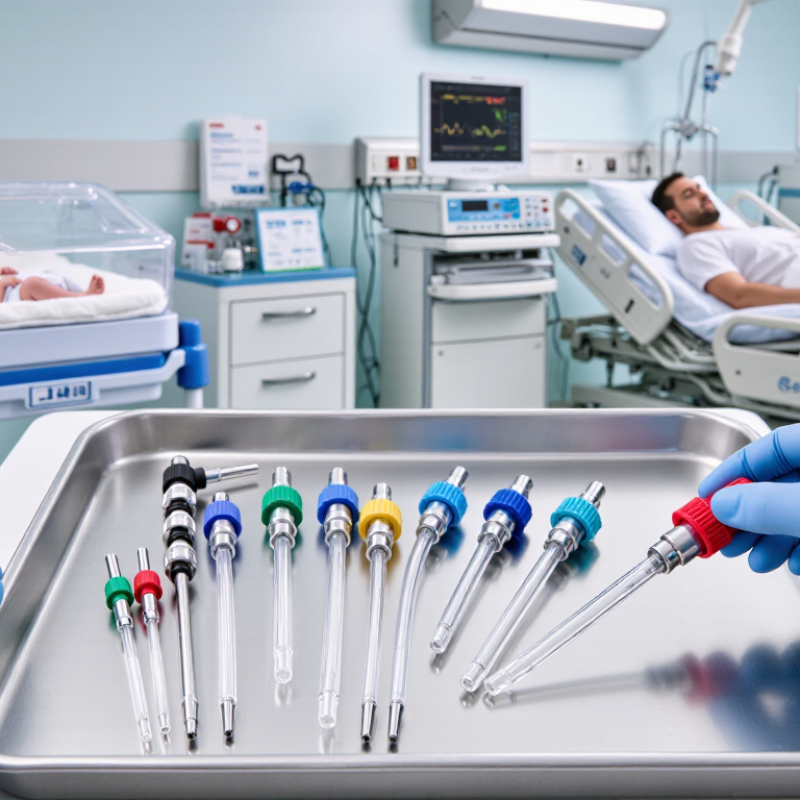
Selecting a suction catheter begins with the airway, not the package. The catheter’s outer diameter should remain under 50% of the endotracheal tube’s internal diameter in adults. The American Association for Respiratory Care (AARC) supports this threshold in its airway suctioning guidance. A smaller catheter may reduce airway occlusion, negative-pressure exposure, and oxygen loss during suctioning.
Measure carefully. A 7.5 mm endotracheal tube should generally pair with a catheter below 3.75 mm outer diameter. French size also matters: French size divided by three approximates diameter in millimeters. A 10 Fr catheter is about 3.3 mm wide. Check the actual outer diameter, because labeling conventions can vary. The AARC 2022 clinical practice guideline also emphasizes using the smallest effective catheter and limiting suction duration.
The 50% rule is useful, but it is not perfect. Thick secretions, airway resistance, and patient response may change the decision. Watch the monitor and the patient’s chest movement. Falling oxygen saturation, coughing, or sudden bradycardia requires reassessment. I have seen teams focus on secretion removal while overlooking tube size. That is an easy mistake. Catheter selection should combine measured tube dimensions, suction pressure control, preoxygenation when indicated, and continuous clinical observation.
Selecting a suction catheter is only part of patient safety. Pressure settings matter just as much. For adults, treat −200 mmHg as a maximum limit, not a routine target. Many patients need considerably less suction to clear secretions. Set the regulator before catheter insertion, then confirm the reading on the gauge. A blocked catheter can create stronger negative pressure at the airway.
Children require a gentler approach. Their airways and mucosal tissues are smaller and more vulnerable to trauma. Use the lowest effective pressure, based on age, clinical condition, facility policy, and qualified clinical guidance. Neonates and unstable children may need especially conservative settings. Watch the patient, not only the equipment: coughing, bleeding, desaturation, bradycardia, or distress should prompt immediate reassessment.
Keep suction brief and allow recovery between passes. I have seen hurried care turn a reasonable setting into an unsafe event. That mistake is easy to repeat. Check the tubing, regulator, catheter size, and connection before use. A clean gauge reading does not prove that the pressure is appropriate for every patient. Recheck it when equipment changes, symptoms shift, or the child becomes less tolerant. No single number replaces clinical judgment.
Selecting a suction catheter is a clinical decision, not a routine supply choice. The patient’s airway, secretion volume, ventilation method, and infection risk should guide it. Trained clinicians should also follow facility protocols and current infection-prevention guidance.
Open suction systems require disconnecting the ventilator circuit. This may briefly reduce oxygen delivery and disturb positive pressure. They can be practical for short procedures, especially when circuit disconnection is acceptable. However, the catheter is exposed during handling, so aseptic technique, hand hygiene, protective equipment, and proper disposal matter greatly.
Closed suction systems keep the catheter inside a protective sleeve and maintain circuit connection. This design can help preserve oxygenation, reduce circuit disturbance, and limit contact with respiratory secretions. It may be useful for patients needing frequent suctioning, high oxygen support, or strict ventilator management. Still, a closed system is not automatically safer. The sleeve, valve, and catheter need regular inspection, and the system must be replaced according to clinical policy.
Size matters. An oversized catheter can obstruct airflow, while an undersized catheter may remove secretions poorly. Monitor oxygen saturation, breath sounds, airway pressure, and patient response before and after suctioning. Avoid routine suctioning without assessment. That habit deserves reconsideration. Even careful teams can overlook secretion thickness, catheter depth, or a sudden change in ventilator alarms. Reassess the patient, document findings, and adjust the approach when conditions change.
| Selection Dimension | Open Suction System | Closed Suction System | Patient-Safety Consideration |
|---|---|---|---|
| Ventilator disconnection | The patient is temporarily disconnected from the ventilator during catheter insertion and suctioning. | The catheter remains within a protective sleeve and can be advanced without disconnecting the ventilator circuit. | A closed system may be preferable when avoiding circuit disconnection is clinically important. |
| PEEP and lung-volume stability | Disconnection can contribute to loss of positive end-expiratory pressure and temporary lung-volume reduction. | The ventilator circuit remains closed, helping preserve delivered PEEP during suctioning. | Closed suction is often considered for patients requiring high PEEP, high oxygen concentrations, or strict alveolar-recruitment control. |
| Oxygenation during the procedure | Oxygen delivery may be interrupted unless an alternative oxygenation or ventilation method is provided. | Ventilator support and oxygen delivery can continue while suction is performed. | Monitor oxygen saturation and the patient’s clinical response with either system; use preoxygenation when indicated by local protocol. |
| Aerosol and environmental exposure | Opening the circuit may increase the release of respiratory droplets or aerosols into the surrounding area. | The sleeve and inline configuration can reduce circuit opening and limit environmental contamination during routine suctioning. | Closed suction may be useful when aerosol exposure is a significant infection-control concern, together with appropriate PPE and ventilation controls. |
| Sterility and handling | A new sterile catheter is generally used for each suction procedure. | The catheter is designed for repeated use within a closed circuit for the period specified by institutional policy and the device instructions. | Use aseptic technique, hand hygiene, and correct catheter handling regardless of system type. |
| Cross-contamination risk | The catheter is discarded after use, which limits reuse of the suction catheter itself. | The catheter remains attached to the circuit, so contamination can occur if the sleeve, access port, or lavage pathway is handled incorrectly. | Closed systems do not eliminate infection risk; follow replacement, cleaning, and hand-hygiene procedures precisely. |
| Mechanical ventilation duration | May be practical for short-term ventilation when frequent disconnection is unlikely to cause clinical instability. | Can be convenient for prolonged ventilation because the circuit does not need to be opened for every suction episode. | Consider expected ventilation duration, suction frequency, circuit stability, and staffing competence. |
| Secretion assessment | Provides direct access to the catheter and may allow straightforward visual assessment of secretions. | The protective sleeve and inline components may make visual assessment less direct. | Assess secretion amount, color, consistency, breath sounds, airway pressures, and oxygenation rather than relying on catheter appearance alone. |
| Ease of use and training | The procedure is familiar in many clinical settings but requires careful reconnection and sterile handling. | Requires staff training to control catheter depth, suction pressure, lavage use, and sleeve or port management. | Competency-based training and standardized protocols are essential for both systems. |
| Infection-prevention evidence | When used with aseptic technique and proper circuit care, an open system can be used safely. | May reduce circuit opening and environmental contamination, but a closed system alone does not guarantee a lower ventilator-associated pneumonia rate. | Ventilator-associated infection prevention depends on a bundle of measures, including hand hygiene, oral care, head-of-bed positioning, and minimizing unnecessary ventilation. |
| Best-fit patient profile | Patients who can tolerate brief ventilator disconnection and do not require continuous circuit stability. | Patients with severe oxygenation impairment, high PEEP requirements, frequent suction needs, or increased concern about aerosol release. | Select according to the patient’s respiratory status, infection-control assessment, local policy, and clinician judgment. |
Choosing a suction catheter starts with airway size, not convenience. The 2022 American Association for Respiratory Care clinical practice guideline recommends a catheter that occupies less than 50% of an adult artificial airway lumen. For pediatric airways, the recommended limit is less than 70%. A smaller catheter may reduce airway occlusion during suctioning.
Limit each suction pass to 15 seconds. Treat this as a ceiling, not a target. Apply suction while withdrawing, and stop earlier if secretions clear. Between passes, allow oxygenation to recover and reassess SpO2, heart rate, respiratory effort, skin color, and waveform quality. The AARC guideline also supports preoxygenation when clinically indicated. It advises against routine saline instillation because it may worsen coughing, desaturation, or secretion movement.
A falling SpO2 is important, but it can lag behind clinical deterioration. In practice, a patient may appear distressed before the monitor changes. WHO’s Global Patient Safety Action Plan 2021–2030 emphasizes reliable monitoring and safer care processes. That principle matters here: suction should be brief, observed, and documented. Record catheter size, suction pressure, pass duration, oxygen response, and secretion characteristics. A 15-second limit cannot replace judgment. I still find that difficult when secretions remain thick. Stopping, reoxygenating, and asking whether another pass is truly needed may prevent a preventable complication.
How to Select Suction Catheters for Patient Safety?
Catheter selection begins with sterility. Check the package seal, expiry date, and catheter size before opening. The CDC recommends sterile, single-use catheters for open suctioning. This reduces contamination risk, especially in vulnerable patients. Choose the smallest effective catheter. An oversized catheter may increase airway blockage and oxygen loss. It is easy to focus on equipment and miss the patient’s condition.
Depth also matters. The 2022 AARC Clinical Practice Guideline recommends shallow suctioning first for artificial airways. Advance only when secretions remain. Limit each suction pass to 15 seconds or less. Adult negative pressure should generally remain below 200 mmHg, while pediatric settings require lower limits. These figures are guardrails, not permission to suction automatically. Before and after the pass, assess oxygen saturation, heart rate, respiratory effort, breath sounds, and skin color. Stop if the patient becomes distressed. Reoxygenate and seek clinical support when recovery is delayed. I would not treat one “normal” reading as proof of safety.
Tips: Match catheter size to the airway device. Measure the intended depth when possible. Avoid routine saline instillation; AARC guidance does not support it. Document the patient’s response, not only the procedure. Small details matter.
Verify sterility, suction depth, suction duration, and patient response before and after each suction pass.
The chart shows evidence-based safety targets rather than patient outcome data. Use a sterile, single-use catheter; limit insertion to the measured airway depth; keep each suction pass within 15 seconds; and assess the patient before and after suctioning. Local clinical protocols should take precedence.
Keep the catheter’s outer diameter below half the tube’s internal diameter. Smaller is often safer.
Choose a catheter below 3.75 mm outer diameter. A 10 Fr catheter measures about 3.3 mm.
Divide the French size by three for an approximate diameter. Check the actual outer diameter, because labels can vary.
No. Thick secretions, airway resistance, and patient response may require reassessment. The rule guides decisions, not replaces them.
Falling oxygen saturation, severe coughing, sudden bradycardia, or changing chest movement requires prompt attention. Stop and reassess.
It may suit short procedures when ventilator disconnection is acceptable. Disconnection can briefly reduce oxygen delivery and positive pressure.
It keeps the circuit connected and may preserve oxygenation. The protective sleeve also reduces secretion contact during handling.
No. Inspect the sleeve, valve, and catheter regularly. Follow local replacement policies and infection-prevention procedures.
Suctioning without assessment may cause unnecessary airway disturbance. Check secretions, breath sounds, oxygen levels, and airway pressure first.
Record patient response, secretion features, oxygenation, breath sounds, and airway pressures. I might miss a detail without a structured check.
How to select suction catheters for patient safety begins with matching the catheter’s outer diameter to the patient’s airway. For an endotracheal tube, the catheter diameter should remain below 50% of the tube’s internal diameter to support effective secretion removal while reducing the risk of airway blockage and oxygen loss. Suction pressure must also be appropriate: adults should generally remain at or below −200 mmHg, while children and more vulnerable patients require lower settings based on clinical assessment.
The choice between open and closed suction systems should reflect ventilation needs and infection-control procedures. Each suction pass should be limited to 15 seconds, followed by reassessment of oxygenation, breathing, heart rate, and overall tolerance. Before and after suctioning, clinicians should confirm sterility, estimate the appropriate suction depth, and observe the patient’s response. Careful preparation, gentle technique, and continuous monitoring help reduce complications and promote safer airway management.

Wigivida Medical