Advanced Orthopedic Fixation Solutions Engineered for Clinical Excellence
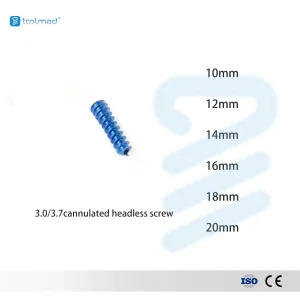
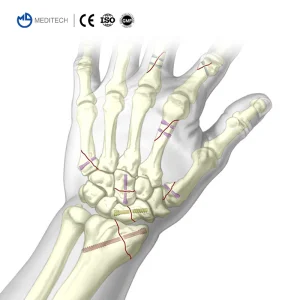
The global orthopedic implant market is witnessing a paradigm shift toward Minimally Invasive Surgery (MIS). Headless cannulated screws have emerged as the gold standard for intra-articular and extra-articular fractures where prominent screw heads could cause soft tissue irritation or tendon impingement. These precision-engineered devices are critical in treating scaphoid fractures, radial head fractures, and bunionectomies.
Currently, the industry is dominated by high-strength Titanium Alloys (Ti6Al4V) and biocompatible stainless steels. As surgical techniques evolve, the demand for varied thread pitches and specialized compression mechanisms has skyrocketed, placing immense pressure on manufacturers to innovate rapidly while maintaining stringent regulatory compliance (FDA, CE, ISO 13485).
Utilization of Grade 5 Titanium for superior strength-to-weight ratio and bio-integration.
Variable thread pitch designs that provide controlled compression across fracture sites.

Staying Ahead with AI-Driven Design and Bio-Compatible Innovations
The rise of PLLA and PLGA absorbable screws (Interference screws) reduces the need for second surgeries for implant removal, particularly in pediatric and sports medicine applications.
Incorporating hydroxyapatite (HA) or antimicrobial coatings to accelerate osteointegration and prevent post-operative infections, enhancing patient recovery rates.
OEM/ODM services are shifting toward 3D-printing compatibility and patient-specific implant geometries tailored to complex anatomical structures.
The Strategic Advantage of Integrated Supply Chains and Technical Prowess
Global procurement managers from Europe, North America, and Southeast Asia increasingly look to China-based OEM/ODM partners for headless cannulated screws. The reasons are multifaceted: cost-efficiency is no longer the sole driver; instead, it is the combination of rapid prototyping, massive production scale, and adherence to international medical standards.
Our proximity to raw material suppliers and high-end CNC machining clusters allows for faster turnaround times from design to delivery.
Every screw undergoes mechanical testing (torsional strength, axial pull-out) and biocompatibility assessments to ensure surgical safety.
We understand the anatomical differences in global populations, offering varying screw lengths and diameters tailored to specific regional markets.

Foshan Wigivida Medical Co., Ltd. is a leading China-based manufacturer of high-quality medical consumables and devices, specializing in respiratory products, medical tubes, urology products, hypodermic and surgical consumables. With years of dedicated experience in the healthcare industry, Wigivida has built a reputation for providing reliable, safe, and innovative solutions to hospitals, clinics, and medical distributors worldwide.
The company offers a comprehensive product range, including oxygen masks, ventilator accessories, catheters, Foley catheters, hypodermic needles, syringes, surgical drapes, sterile gloves, sutures, cotton swabs, gauze rolls, IV sets, and disposable medical kits. Each product is manufactured with strict adherence to quality standards, ensuring biocompatibility, durability, and patient safety.
Wigivida Medical emphasizes innovation, research, and precision manufacturing, combining advanced production technology with a rigorous quality management system. The company also provides customized solutions to meet the specific needs of healthcare providers, supporting efficient hospital workflows and minimizing infection risks.
Guided by the principles of "quality first, service first, and customer satisfaction-driven," Foshan Wigivida Medical Co., Ltd. has earned an excellent reputation both domestically and internationally. With a professional R&D team, modern manufacturing facilities, and dedicated after-sales service, the company continues to advance the medical consumables industry, delivering safe, effective, and high-quality healthcare solutions that improve patient outcomes and support global healthcare innovation.
Versatile Fixation for Diverse Orthopedic Challenges
Ideal for scaphoid fractures and carpal fusions where the headless design prevents interference with delicate tendons.
Extensively used in bunionectomies (Hallux Valgus correction), metatarsal osteotomies, and midfoot arthrodesis.
Provides stable internal fixation for radial head fractures, malleolar fractures, and osteochondritis dissecans (OCD) lesions.
From Conceptual Blueprint to Sterile Implantable Solution
Identifying clinical requirements and material specifications.
High-precision CNC machining and 3D modeling for rapid iteration.
Verification and validation through mechanical and biological testing.
Class 10,000 cleanroom packaging and ethylene oxide (EO) sterilization.
High-Performance Solutions for Complex Bone Fixation
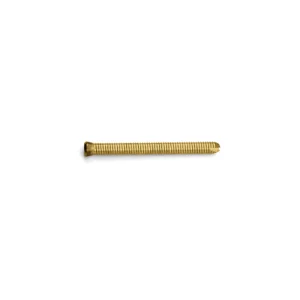
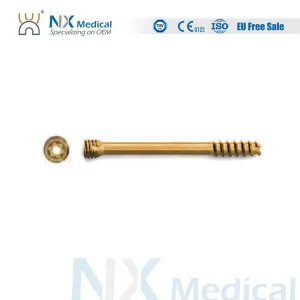
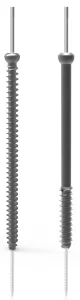
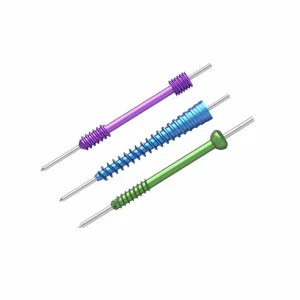
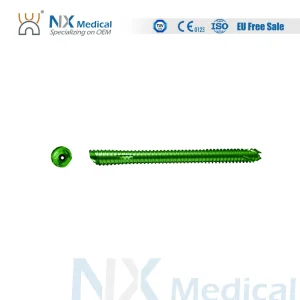
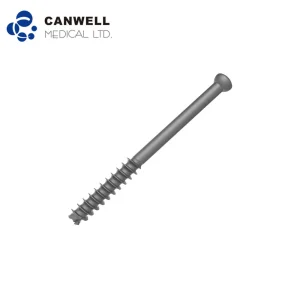
Our Headless Cannulated Compression Screws are designed based on the Herbert screw principle, utilizing a difference in thread pitch between the leading (distal) and trailing (proximal) threads. This engineering nuance allows the screw to draw two bone fragments together as it is driven into the bone, creating dynamic compression. This is vital for primary bone healing and reduces the risk of non-union in small bone fractures.
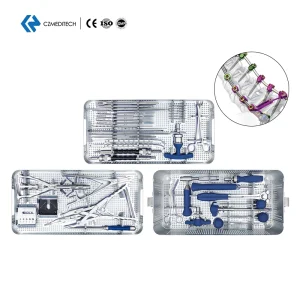
As a specialized factory, we emphasize cannulation—the hollow center of the screw—which allows for precise placement over a K-wire. This ensures that the surgeon can achieve perfect anatomical reduction before committing to the final implant position. In our ISO-certified facilities, we utilize Swiss-type CNC lathes to ensure that the tolerances of these cannulated bores are within microns, preventing wire binding and ensuring smooth insertion.
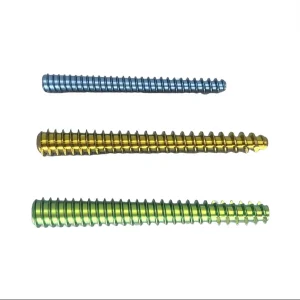
Material integrity is non-negotiable. We source ELI (Extra Low Interstitial) Titanium Alloy, which offers superior fatigue resistance compared to standard medical-grade titanium. This is particularly important for implants that will remain in the body long-term, where cyclic loading from walking or hand movement could otherwise lead to implant failure. Our surface treatment processes, including Type II Anodization, further enhance the biocompatibility and color-coding of the implants for easier identification in the operating room.
Furthermore, our commitment to OEM/ODM excellence means we provide comprehensive technical dossiers for our partners, aiding in local regulatory registrations. By combining the rigorous quality control of a medical device manufacturer with the innovative spirit of a tech-forward company, we empower surgeons globally to provide the best possible care for their patients.
 Wigivida Medical