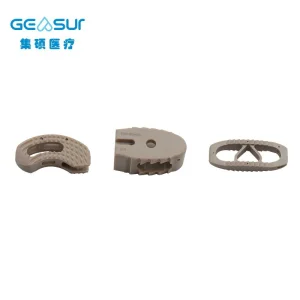
The spinal fusion market is witnessing an unprecedented shift towards biomimetic materials and personalized implants.
The global Interbody Fusion Cages market is currently valued at billions of dollars, driven by the increasing prevalence of degenerative disc diseases, spinal stenosis, and the aging global population. As of 2024, the industry is transitioning from traditional solid metal implants to advanced composite structures. Manufacturers are now focusing on the synergy between PEEK (Polyetheretherketone) and Titanium, creating "hybrid" solutions that offer the best of both worlds: the radiolucency of polymers and the superior osseointegration of metals.
In North America and Europe, the demand for Minimally Invasive Surgery (MIS) has led to the development of expandable cages and 3D-printed porous titanium structures. Meanwhile, the Asia-Pacific region is emerging as a manufacturing powerhouse, with Chinese factories like Yuna Medical leading the way in providing high-quality, CE-certified orthopedic implants that meet rigorous international standards. The shift towards outpatient spinal procedures is further accelerating the demand for streamlined instrument sets and specialized cage designs like TLIF (Transforaminal Lumbar Interbody Fusion) and OLIF (Oblique Lumbar Interbody Fusion).
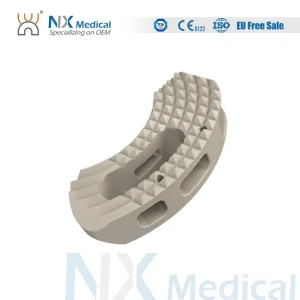
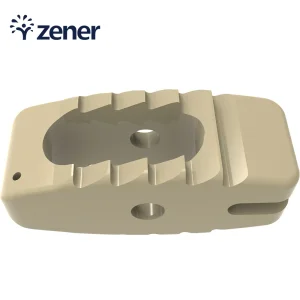
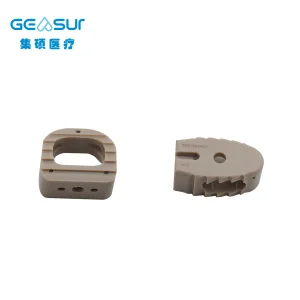
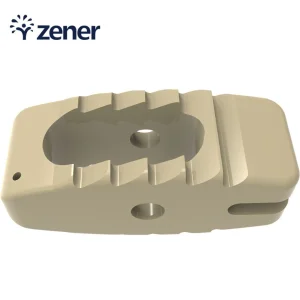
Our Nx Medical series represents the pinnacle of surface engineering. By applying a specialized Titanium Coating to a PEEK core, we achieve a modulus of elasticity close to human bone while providing a textured surface that encourages bone ingrowth.
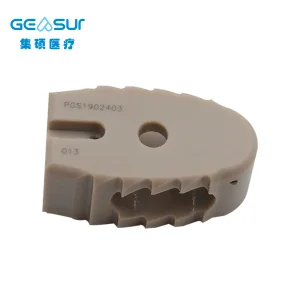
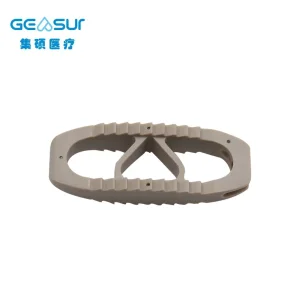
This "Large Window" design allows for maximum bone graft volume, ensuring a higher fusion rate and better clinical outcomes for patients undergoing lumbar fusion.
View Technical SpecsAdditive manufacturing allows for the creation of porous titanium structures that mimic trabecular bone, significantly reducing "stress shielding" and promoting rapid biological fixation.
Research is shifting towards PEEK infused with Hydroxyapatite (HA) or Zeolite to overcome the hydrophobic nature of standard PEEK, making the implant "bone-friendly."
Minimally Invasive Surgery requires smaller incisions. Expandable interbody cages allow for insertion through narrow corridors, expanding only once inside the disc space to restore lordosis.
The integration of AI-driven preoperative planning is another major trend. Surgeons now use digital models to select the exact height, width, and lordotic angle of the cage before the first incision is made. This precision reduces surgical time and minimizes the risk of implant migration or subsidence. For suppliers, this means maintaining a vast inventory of sizes and configurations to meet the specific anatomical needs of diverse patient populations.
Hospital procurement departments and international medical device distributors have increasingly stringent criteria for selecting Interbody Fusion Cage suppliers. Beyond the basic clinical efficacy, the focus has shifted towards:
Chinese manufacturers have responded by investing heavily in R&D and automated production lines to meet these global demands, offering premium quality at a sustainable cost structure.
Years Experience
Export Countries
Patent Certificates
Technical Support
The application of interbody fusion cages varies significantly based on regional clinical practices. In the United States, there is a heavy emphasis on TLIF and ALIF procedures using robotic assistance. The cages must be compatible with navigation systems and often feature specialized markers for intraoperative imaging.
In European markets, such as Germany and France, there is a strong preference for "Motion Preservation" where possible, but when fusion is necessary, PEEK cages with large graft windows are favored for their excellent radiolucency, allowing surgeons to clearly monitor the fusion progress through X-rays and CT scans.
In Emerging Markets (Southeast Asia, Latin America), the focus is on versatility. Suppliers who provide "All-in-One" kits—containing the implants, trials, and insertion tools—are highly valued as they simplify the logistics for smaller regional hospitals. Yuna Medical’s "Surgical Instrument Sets" are specifically designed to address these diverse environmental needs, providing robust, easy-to-use tools that perform consistently in any surgical theater.
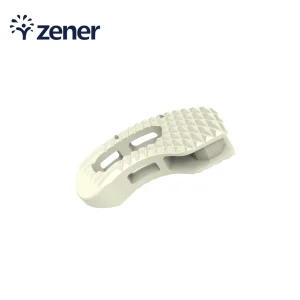
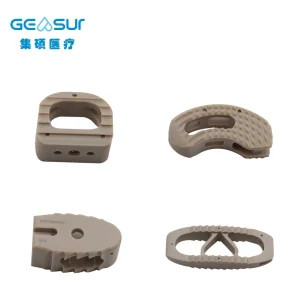
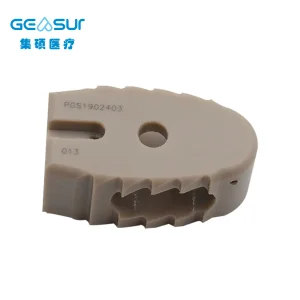
The Banana Lumbar Peek Interbody Fusion Cage is engineered for optimal placement within the disc space. Its curved geometry is ideal for restoring lumbar lordosis and ensuring maximum surface contact with the vertebral endplates.
Paired with our Titanium Coating, this cage offers a "Best-in-Class" solution for surgeons performing PLIF procedures who require an implant that resists migration while facilitating bone growth.
Explore Product DetailsBuilding on three decades of excellence in orthopedic manufacturing.

With 30+ years of experience, Yuna Medical continuously advances in orthopedic technology and global market presence.

Over 20% of employees are R&D professionals driving innovation in orthopedic and rehabilitation solutions.

Certified by ISO, CE, FDA, and CCC, ensuring top-tier product quality and international compliance.
Collaborating with leading universities and experts to enhance research, product development, and clinical effectiveness.
Changzhou Yuna Medical Apparatus And Instruments Co., Ltd. (hereinafter referred to as Yuna Medical) was established in 1992. As a high-tech enterprise integrating research, development, manufacturing, and sales. Yuna Medical has maintained steady growth for the past 30 years and has entered a phase of rapid expansion since 2017.
Guided by the spirit of “Expanding with love, Striving for progress,” Yuna Medical is committed to technological innovation and the development of advanced medical products that empower clinical professionals and benefit patients worldwide.
Our main product lines include Orthopedic Power Tool Systems, Orthopedic External Fixation Systems, Cervical and Lumbar Rehabilitation Solutions.
Sourcing Interbody Fusion Cages directly from a leading Chinese factory like Yuna Medical offers several strategic advantages for global partners:
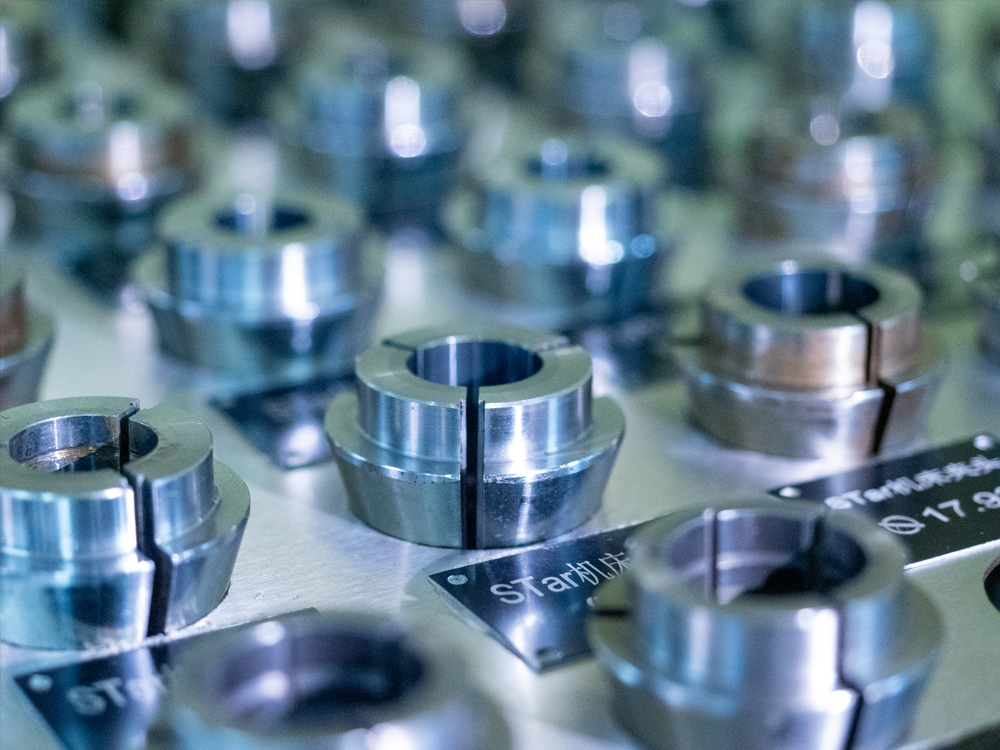
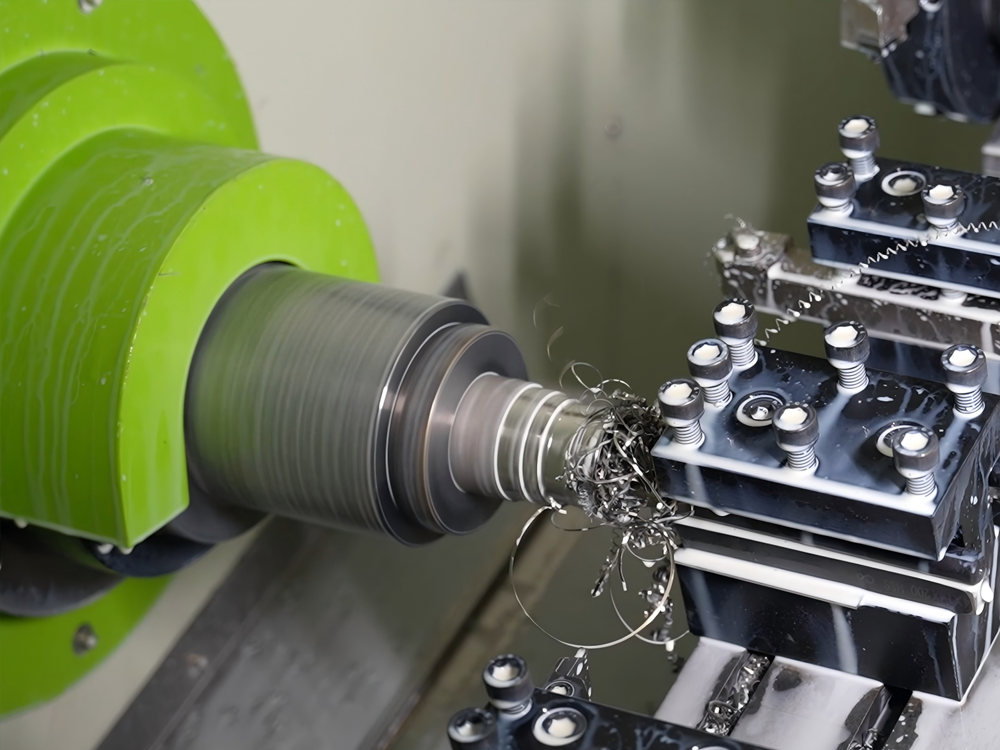
1. Manufacturing Scale & Precision: Our facility in Changzhou utilizes state-of-the-art CNC machining and clean-room environments. This scale allows us to produce high volumes while maintaining the micron-level precision required for spinal implants.
2. R&D Integrated Production: By having our R&D team on-site with our manufacturing engineers, we can rapidly prototype and iterate new designs based on surgeon feedback, reducing the "Time-to-Market" for innovative products.
3. Supply Chain Resilience: China’s robust industrial ecosystem ensures we have immediate access to high-purity medical-grade titanium and PEEK raw materials, insulating our clients from global supply shocks.
4. Competitive "Total Cost of Ownership": While we never compromise on quality, our efficient production processes and vertical integration allow us to offer pricing that helps hospitals optimize their surgical budgets.

Conclusion: As the medical landscape evolves, the role of Interbody Fusion Cages Manufacturers and Suppliers becomes more critical than just being a part of the supply chain. Companies like Yuna Medical are becoming clinical partners, providing the tools and technologies that define the success of modern spinal surgery. Whether it is through the use of high-grade PEEK for its radiolucent properties or Titanium for its structural integrity, our mission remains focused on patient recovery and surgical excellence. We invite global distributors and healthcare providers to explore our extensive catalog of lumbar and cervical interbody fusion systems, backed by over 30 years of manufacturing expertise and a commitment to global health.
For more information on our Orthopedic Implant Systems or to request a customized quote for bulk procurement, please contact our international sales department. We are dedicated to providing the highest level of service and technical support to ensure your success in the orthopedic market.
 Wigivida Medical